Updated: 2 February 2026 • Reading time: ~8 minutes
“Reasonable adjustments” is one of those phrases that pops up in SEND conversations and instantly feels intimidating. But the idea behind it is simple:
Schools should remove barriers so disabled children can access education as fairly as possible.
This article explains what reasonable adjustments are, gives examples you can ask for, and helps you request them in a calm, practical way.
What are reasonable adjustments?
Reasonable adjustments are changes a school makes to reduce disadvantage caused by disability. These adjustments can be about:
- the environment (noise, lighting, seating)
- teaching approaches (instructions, pacing, chunking)
- routines and transitions
- behaviour policies (considering disability-related behaviour)
- communication with parents
Adjustments don’t have to be complicated. Often, small changes make a big difference.
Helpful mindset: Adjustments are not “special treatment”. They’re how children get equal access to learning.
Common reasonable adjustments (ideas you can take to school)
1) Sensory and environment
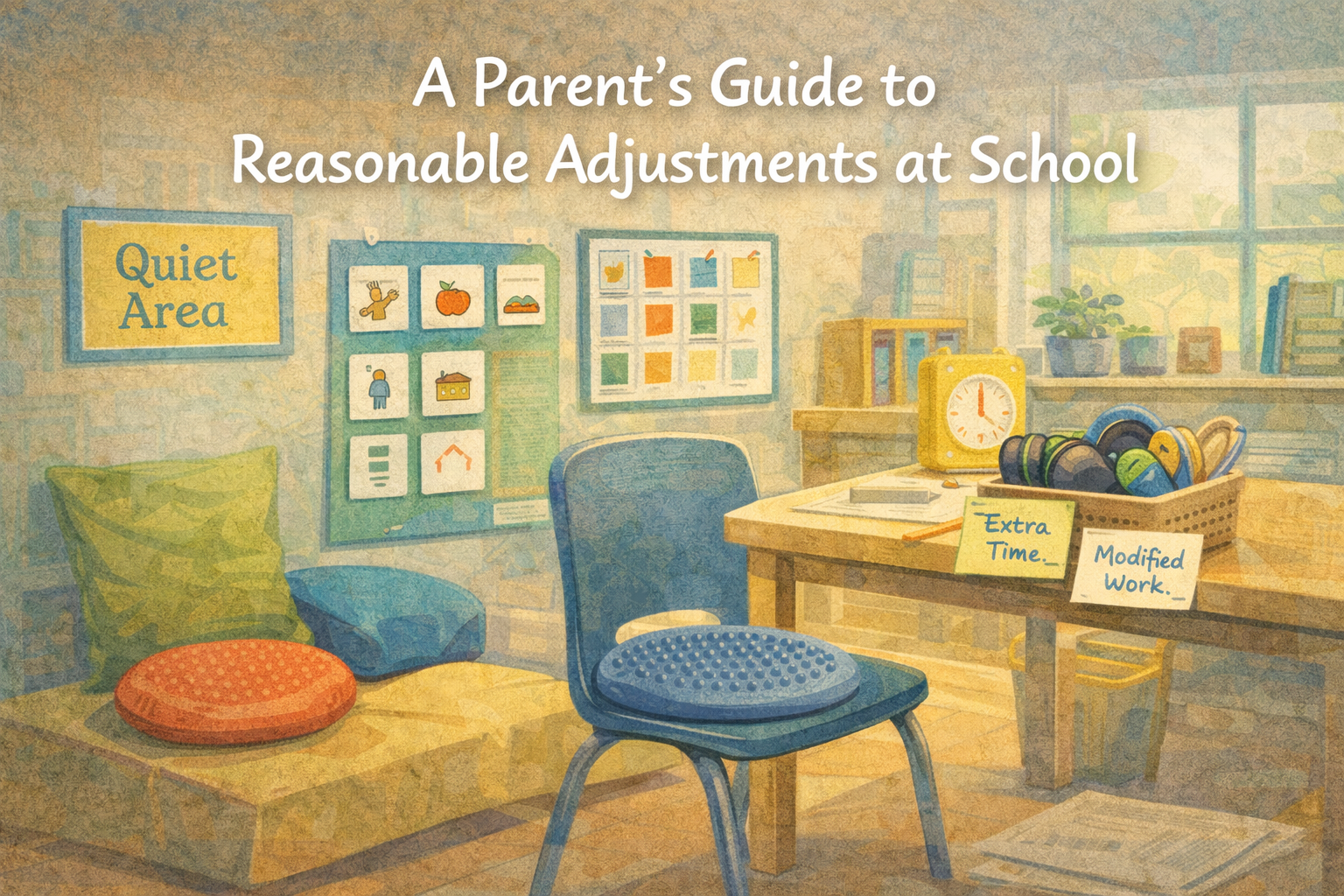
- ear defenders or noise-cancelling headphones
- seating away from doors, windows, or high-traffic areas
- reduced visual clutter
- access to a low-stimulus space
- permission to wear comfortable uniform alternatives (where possible)
2) Movement and regulation
- movement breaks built into the day
- alternative seating (wobble cushion, footrest)
- fidget tools if helpful
- safe, calm exit plan when overwhelmed
3) Learning and processing
- instructions given in steps (not all at once)
- visual prompts and checklists
- extra processing time before answering
- reduced copying from the board
- alternative ways to show learning (typing, voice notes, practical tasks)
4) Social and unstructured times
- quiet lunch option or calm club
- structured support for playtimes
- buddy systems (only if your child wants it)
- access to a key adult check-in
5) Communication and predictability
- visual timetable and advance warning of changes
- home–school communication log
- clear plan for supply teachers (brief support notes)
- social stories for new routines
How to request adjustments (without it turning into a fight)
Try this structure:
- Describe the barrier (“Noise in the lunch hall causes overwhelm.”)
- Describe the impact (“They become distressed and stop eating.”)
- Suggest an adjustment (“Could they eat in a quieter space or earlier sitting?”)
- Agree a review date (“Let’s review in 4 weeks.”)
Phrase to use: “What reasonable adjustments can we put in place to reduce this barrier?”
What makes an adjustment “reasonable”?
Schools may consider factors like:
- how effective the adjustment would be
- cost and resources
- practicality in their setting
- health and safety
But “reasonable” doesn’t mean “whatever is convenient”. If a barrier is significant, schools should work creatively to reduce it.
Get it in writing
After a meeting, send a short email summarising what was agreed and when it will be reviewed. Written clarity prevents confusion and helps keep support consistent.
Final reminder
You’re allowed to ask for adjustments that help your child access education without distress. The right supports can be the difference between surviving school and actually learning.
Next read: Keeping Records: The Simple Paper Trail That Protects You
Quick FAQs
What if school says an adjustment isn’t “reasonable”?
Ask what alternatives they can offer to reduce the barrier. Sometimes there are other ways to achieve the same outcome.
Should adjustments be in writing?
Yes — even a brief email summary helps keep support consistent, especially when staff change.
Are adjustments only for children with EHCPs?
No. Adjustments can be appropriate for disabled pupils with or without an EHCP.