Updated: 2 February 2026 • Reading time: ~8 minutes
SEND parenting is a special kind of exhaustion. It’s not just the day-to-day care — it’s the phone calls, meetings, forms, waiting lists, school anxiety, and the constant feeling that you have to prove your child’s needs.
If you’re running on empty, that doesn’t mean you’re failing. It means you’ve been carrying too much for too long.
This is a gentle, practical guide to looking after yourself while you advocate — without adding pressure or guilt.
Why burnout is so common for SEND parents
Burnout often happens when:
- your child needs constant co-regulation
- sleep is disrupted
- you’re managing school stress and paperwork
- support is limited or inconsistent
- you feel judged or dismissed
It’s not “stress”. It’s sustained pressure. And it deserves care.
Signs you might be burning out
- you feel numb or tearful most days
- small tasks feel impossible
- you’re constantly on edge
- you can’t switch off, even when you have a moment
- you’re getting ill more often
None of this is a character flaw. It’s your nervous system waving a flag.
Micro-rest: the kind of rest you can actually do
When life is full, “take a weekend off” is not helpful advice. Try micro-rest instead:
- sit in silence for 3 minutes
- step outside for fresh air while your child watches a programme
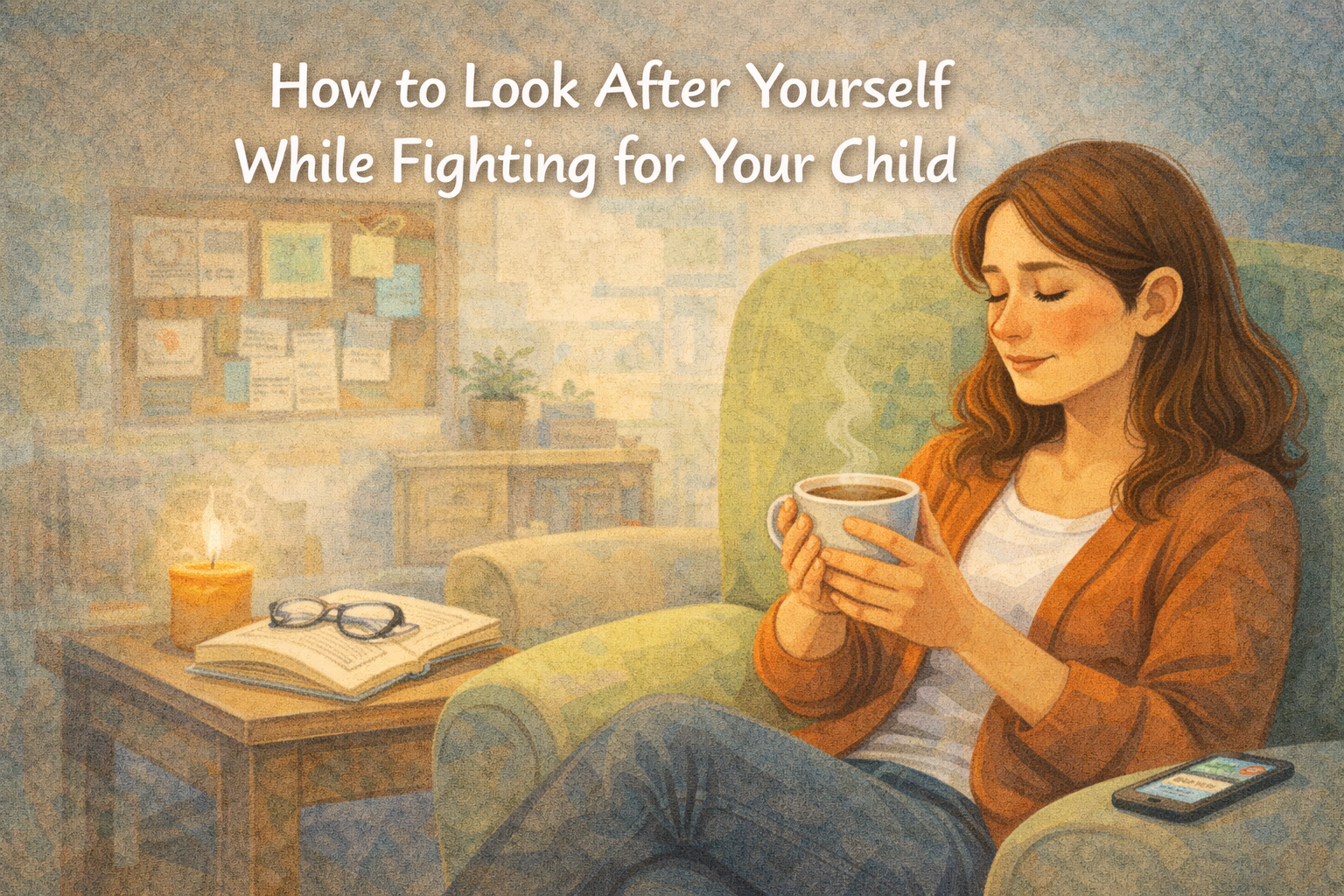
- drink a hot drink slowly (even if it goes cold once)
- text a friend one honest sentence
- do one small thing that makes your body feel safer (blanket, shower, music)
Lower the “life admin” expectations
When your child’s needs are high, your household will not look like a Pinterest board. That’s fine.
Choose one:
- food that’s easy
- clothes that are clean enough
- house that is functional, not perfect
Perfection is expensive. Your energy is precious.
Share the advocacy load (where you can)
If possible:
- take someone to meetings
- ask a friend to help you draft an email
- use SENDIASS support for advice and letters
- split paperwork tasks into 10-minute chunks
You don’t have to do every hard thing alone.
Let your body know you’re safe
When you live in fight-or-flight for months, your body needs small signals of safety. Gentle options:
- slow breathing (in for 4, out for 6)
- feet on the floor, noticing five things you can see
- stretching your shoulders and jaw
- short walks
This isn’t about “being zen”. It’s about giving your body a break from alarms.
When you need more support
If you feel persistently low, anxious, or overwhelmed, it’s okay to speak to your GP or seek mental health support. Many parents benefit from counselling, peer support groups, or community services.
A final reminder
You are doing the work of several systems at once. It makes sense that you’re tired.
Looking after yourself isn’t selfish. It’s how you stay in the fight for the long haul — and how you show your child that their needs matter and yours do too.
Next read: You’re Not Alone: What I Wish Someone Told Me at the Start
Quick FAQs
How do I handle guilt when I rest?
Remind yourself that rest is what keeps you functional. You’re not abandoning your child — you’re refuelling.
What if my partner/family doesn’t understand?
Share one article or a short summary of your child’s needs. Sometimes people need a clear explanation to catch up.
Is it normal to feel angry at the system?
Yes. Anger often shows up when you care deeply and feel blocked. It can be a signal to seek support and boundaries.